Part Two · The Age Bands
Three to Four Years (The Pre-Schooler)
The year between a child’s third and fourth birthdays is often described as a 'magical' period. It is a time when the rapid-fire 'why?' questions start, when the first real friendships are forged over a shared sandpit, and when the boundaries between reality and imagination are wonderfully blurred. Your child is no longer a toddler, but they are not yet a 'school child'; they are in a vibrant middle ground, becoming increasingly independent, communicative, and curious about the world beyond their immediate family.
During this year, you will notice a shift from 'doing' to 'thinking'. While they are still very physical beings who need to run and climb, their play is becoming more purposeful and complex. They are beginning to plan their activities, negotiate with their peers, and express a wider range of emotions. Their language is the key that unlocks this new world, allowing them to share their internal thoughts and wonderings with you in ways that were previously impossible.
It is important to remember that this is also a period of great sensitivity. As they become more aware of the world, they may also become more aware of their own limitations or the feelings of others, which can lead to moments of frustration or shyness. Supporting them through this stage requires a balance of providing firm, safe boundaries and offering the freedom to explore, experiment, and make mistakes. By following their lead and valuing their unique way of seeing the world, you provide the 'secure base' they need to flourish.
The bigger picture
This stage is defined by a massive surge in 'symbolic thought'—the ability to let one thing represent another. Whether it is a word representing an object, a scribble representing a name, or a block representing a phone, the three-to-four-year-old is learning to navigate a world of meanings. Developmentally, the focus shifts toward social cooperation, narrative language, and a blossoming sense of 'self' within a wider community. This is the bridge between the physical world of the toddler and the representational world of the school-aged child.
Communication and Language
Prime areaUnderstanding and Questioning · Vocabulary Expansion · Social Communication
Between three and four, a child’s world expands as they transition from simple labelling to the complex use of language to express ideas, feelings, and hypothetical scenarios. This is the age of 'why?', not just as a request for information, but as a tool to keep a conversation going and to make sense of the logic behind the world. They are beginning to understand that language is a bridge between their inner thoughts and the people around them, allowing them to negotiate, explain, and wonder aloud.
The development of narrative skills is a hallmark of this stage. Children begin to link events together, retelling stories or describing their day with a clearer sense of beginning, middle, and end. Their vocabulary grows at an exponential rate, and they start to experiment with more complex sentence structures, including the use of past and future tenses, even if they occasionally over-regularise verbs, such as saying 'goed' instead of 'went'. This linguistic experimentation is a vital sign of a developing brain seeking patterns.
What you may notice
- Uses longer sentences of four to six words.
- Asks 'who', 'what', and 'why' questions frequently.
- Follows instructions with two or three steps.
- Starts to use talk to organise play, e.g., 'You be the doctor and I’ll be the mummy'.
- Can retell a simple past event or story in the correct order.
- Uses a growing range of vocabulary, including some abstract words like 'happy' or 'soon'.
- Adjusts their speech depending on who they are talking to, such as being gentler with a baby.
At home
- Model 'thinking out loud' by describing what you are doing as you cook or tidy.
- Introduce new words during everyday activities, explaining what they mean in simple terms.
- Read books together every day, stopping to wonder what might happen next.
- Play 'I Spy' using descriptive clues instead of just initial letters.
- Give your child time to process what you have said before expecting a response.
- Reduce background noise like the TV to help them focus on conversation.
- Listen actively, showing genuine interest in their stories and explanations.
In the setting
- Create a 'communication-friendly environment' with quiet spaces for talk.
- Use 'sustained shared thinking' by engaging in back-and-forth interactions that challenge the child's ideas.
- Introduce 'Word of the Week' props to broaden vocabulary through sensory experience.
- Use visual timetables to support the understanding of the day’s sequence.
- Model correct grammar by repeating the child’s sentence back to them correctly rather than overtly correcting them.
Looking ahead to school and future learning
Strong oral language is the bedrock of literacy; children who can express their ideas verbally are better equipped to translate those thoughts into writing and comprehend complex texts in Primary School.
Physical Development
Prime areaGross Motor Skills · Fine Motor Skills
Physicality at this stage is characterised by a growing sense of balance, coordination, and 'can-do' attitude. In terms of gross motor skills, children are becoming more adventurous, learning to hop, jump, and climb with increasing confidence. They are refining their ability to navigate space, beginning to understand how to move around obstacles and judge distances. This physical mastery is not just about strength; it is about the brain learning to plan and execute complex movements, which in turn builds the neural pathways necessary for all future learning.
Fine motor development is also accelerating. The muscles in the hands and fingers are becoming stronger and more dexterous, allowing for more precise movements. This is the stage where children start to show a preference for a dominant hand and begin to move from a palmar grasp to a more functional tripod grip when using tools. These small-scale movements—threading, cutting, drawing—are the direct precursors to the ability to write. A child who can manipulate playdough or thread beads is building the foundation for holding a pencil with ease.
What you may notice
- Can kick, throw, and catch a large ball with some success.
- Walks up and down stairs using alternating feet.
- Pedals a tricycle or moves a balance bike with confidence.
- Uses large-muscle movements like 'painting' a wall with water or sweeping.
- Shows a preference for a dominant hand.
- Can snip paper with child-safe scissors.
- Uses a tripod grip (three fingers) to hold a crayon or pencil.
- Dresses and undresses with some assistance, particularly with buttons or zips.
At home
- Spend time outdoors every day to allow for running, climbing, and jumping.
- Provide 'heavy work' like carrying shopping bags or pushing a wheelbarrow.
- Encourage 'messy play' with sand, water, and mud to strengthen hand muscles.
- Practice using tools like spoons, tongs, and child-safe scissors.
- Set up simple obstacle courses in the garden or living room.
- Dance to music together to develop rhythm and coordination.
- Provide plenty of large paper and chunky crayons for mark-making.
In the setting
- Provide a range of 'open-ended' physical equipment like crates, planks, and tyres.
- Incorporate fine motor 'challenges' into the daily routine, such as using tweezers to pick up pompoms.
- Ensure the outdoor area offers opportunities for both quiet reflection and vigorous activity.
- Model safe ways to climb and take risks, supporting children to assess their own safety.
- Observe and support the transition from gross motor to fine motor movements in mark-making.
Looking ahead to school and future learning
Core strength and fine motor control are prerequisites for sitting at a desk and the physical endurance required for formal writing tasks.
Literacy
Specific areaPhonological Awareness · Reading Comprehension · Writing Skills
Literacy at age three to four is about falling in love with stories and discovering that marks on a page have meaning. It is less about formal reading and more about 'phonological awareness'—the ability to hear and play with the sounds in words. Children begin to enjoy rhythm, rhyme, and alliteration, often wanting to hear the same story repeated until they know it by heart. This repetition is vital; it helps them internalise the structure of language and the nuances of storytelling.
Writing, too, begins as a form of play. A child’s 'scribbles' are actually their first attempts at communication. During this stage, they begin to distinguish between drawing and writing, often creating marks that look like lines or letter-like shapes to accompany their pictures. They start to understand that their name is a special set of symbols that represents them. Encouraging this early mark-making without pressure is key to developing a child who sees themselves as a writer.
What you may notice
- Enjoys rhyming and rhythmic activities, often joining in with refrains.
- Recognises their own name in print.
- Handles books carefully and knows that we read from left to right (in English).
- Can describe what is happening in a picture book.
- Suggests how a story might end or what a character might be thinking.
- Draws marks and attributes meaning to them (e.g., 'That says "Mummy"').
- Can hear and say the initial sound in words (e.g., 'b' for 'ball').
At home
- Read aloud every day, using different voices for different characters.
- Point out environmental print, like shop signs, cereal boxes, and street names.
- Sing nursery rhymes and play with silly made-up words that rhyme.
- Have a 'writing kit' available with different types of paper, envelopes, and pens.
- Write down the stories your child tells you, so they see their words turned into text.
- Play 'sound games'—asking, 'Can you find something that starts with "s-s-s"?'
- Visit the local library together and let them choose books that interest them.
In the setting
- Create a 'print-rich' environment with meaningful labels and posters.
- Use story sacks or puppets to bring books to life and encourage participation.
- Provide opportunities for mark-making in all areas of the setting, including outdoors and in role-play.
- Model the 'mechanics' of reading, such as pointing to words as you read.
- Encourage children to 'write' their own menus, tickets, or lists during play.
Looking ahead to school and future learning
A rich foundation in oral storytelling and sound-play prepares children for the systematic synthetic phonics programmes they will encounter in Reception.
Mathematics
Specific areaNumber and Counting · Numerical Patterns · Shape, Space, and Measure
For a three-to-four-year-old, maths is an active, hands-on exploration of the world. It is not about worksheets; it is about the 'maths-ness' of everyday life. They are developing a sense of 'number sense'—the understanding of what numbers actually represent. This includes learning to count in sequence, but more importantly, it involves 'cardinality'—understanding that the last number reached when counting a set tells you how many there are in total. They may also begin to 'subitise', which is the ability to recognise a small group of objects (up to 3 or 4) without counting them individually.
Beyond numbers, children are also becoming young geometers and scientists. They are fascinated by shapes, patterns, and the properties of objects. They begin to use mathematical language to describe what they see: 'bigger', 'heavier', 'under', 'next to'. They enjoy sorting objects by different criteria—colour, size, or shape—and are starting to notice and create their own simple patterns. This logical thinking is the foundation of all mathematical reasoning.
What you may notice
- Counts up to 10 and beyond in the correct order.
- Points to objects as they count them (one-to-one correspondence).
- Can tell you 'how many' there are in a small group without re-counting.
- Recognises some numerals (e.g., their age or the number on their front door).
- Uses spatial language like 'behind', 'on top', or 'inside'.
- Can sort objects into groups and explain why they belong together.
- Notices and repeats simple patterns (e.g., red block, blue block, red block).
- Uses comparative language like 'more than', 'longer', or 'taller'.
At home
- Count everything! Steps as you walk, buttons on a coat, or pieces of fruit.
- Use mathematical language during chores (e.g., 'Can you find the biggest spoon?').
- Play with puzzles, blocks, and shapes to develop spatial awareness.
- Cook together, measuring out ingredients and talking about 'full' and 'empty'.
- Look for numbers in the environment—on buses, house doors, and price tags.
- Play simple games like 'Hide and Seek' or 'What’s the Time, Mr. Wolf?'.
- Create patterns with pebbles, leaves, or socks when doing the laundry.
In the setting
- Provide 'open-ended' resources for sorting and counting, such as buttons, shells, or stones.
- Incorporate maths into daily routines, like counting how many children are here today.
- Use 'mathematical talk' throughout the day, questioning and speculating about size and shape.
- Set up 'provocations' that encourage problem-solving, like trying to balance blocks.
- Ensure the environment is rich in shapes and numbers that are meaningful to the children.
Looking ahead to school and future learning
Deep 'number sense' and an understanding of patterns are the vital prerequisites for the mental maths and problem-solving required in the primary curriculum.
Understanding the World
Specific areaNatural World and Seasons · People, Culture, and Communities · Technology and Change over Time
At this stage, children are little explorers, driven by a deep curiosity about how the world works. They are starting to notice the passage of time—yesterday, today, tomorrow—and the changes that occur in the natural world, such as the seasons or the growth of a plant. Their world is expanding beyond the home, and they are becoming aware of the different people, jobs, and cultures that make up their community. This is a time of intense observation, as they look for patterns and connections in everything they see.
They are also beginning to understand their place in history, even if their concept of the past is limited to 'when I was a baby' or 'when Mummy was little'. They are curious about how things work and are starting to explore simple technology, from a mechanical whisk to a tablet. This area of learning is about fostering a sense of wonder and respect for the world, encouraging children to ask questions, perform simple 'experiments', and develop a caring attitude towards living things and the environment.
What you may notice
- Talks about significant events in their own life, like birthdays or holidays.
- Notices changes in the weather and the seasons.
- Shows interest in different occupations and what people do.
- Can describe some similarities and differences between themselves and others.
- Uses all their senses to explore natural materials like soil, ice, or leaves.
- Talks about why things happen and how things work.
- Can operate simple equipment, like a camera or a remote control.
- Shows care and concern for living things, like plants or insects.
At home
- Go for 'nature walks' and talk about what you see, hear, and feel.
- Talk about your family history and look at photos of when they (and you) were younger.
- Involve them in gardening—planting seeds and watching them grow.
- Visit different places in the community, like the library, the park, or a place of worship.
- Encourage them to help with simple household 'repairs' or cooking tasks.
- Talk about different cultures and traditions, perhaps through food or stories.
- Let them explore 'how things work' by taking apart old, safe appliances (with supervision).
In the setting
- Provide a 'discovery table' with natural objects, magnifying glasses, and magnets.
- Invite members of the community (e.g., a vet, a librarian) to talk to the children.
- Use world maps and globes to talk about where different animals or people live.
- Observe and record the life cycles of butterflies or frogs in the setting.
- Ensure the environment reflects a diverse range of cultures, families, and traditions.
Looking ahead to school and future learning
Curiosity and the ability to observe and categorise information lay the foundations for future subjects like Science, Geography, and History.
Expressive Arts and Design
Specific areaImagination and Role Play · Artistic Expression and Design · Music and Performance
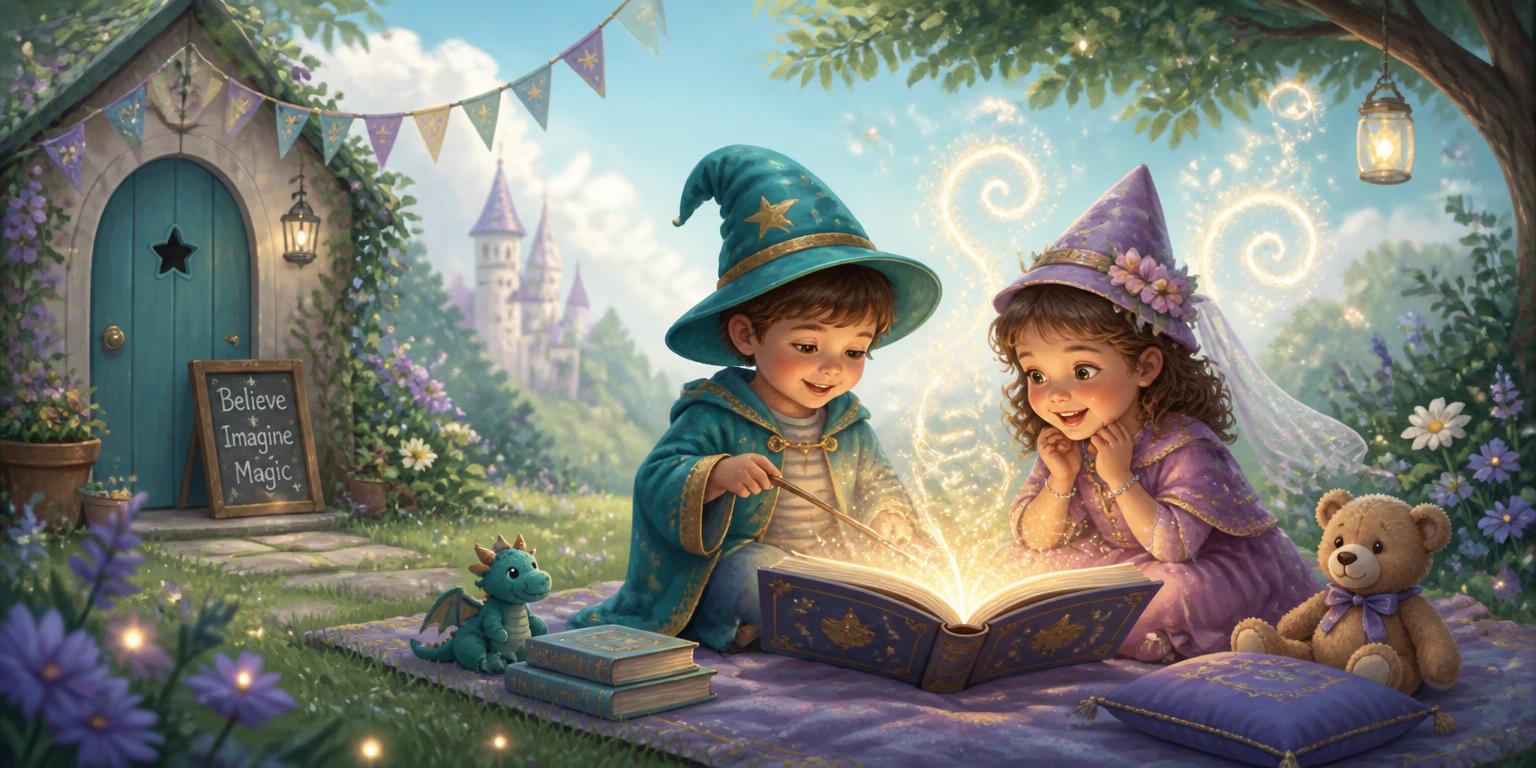
This is the golden age of imagination. For a three-to-four-year-old, a cardboard box is not just a box; it is a rocket ship, a cave, or a dragon’s nest. They are beginning to use their imagination to represent their own ideas and experiences through role-play, art, and music. Their play becomes more complex and social, as they collaborate with others to create elaborate 'make-believe' worlds. This imaginative play is how they process information, practice social roles, and develop creative problem-solving skills.
In their artistic endeavours, they are moving from pure sensory exploration to intentional creation. They begin to have a plan for what they want to make, even if the end result looks different from what they intended. They are learning to use tools with more control and are experimenting with how to join materials together. In music and dance, they are developing a sense of rhythm and are able to express their feelings through movement. This area of learning is about the process, not the product; it is about the joy of creating and the freedom to express oneself.
What you may notice
- Engages in imaginative role-play, often taking on a specific character.
- Uses available resources to create 'props' for their play.
- Draws representational pictures, like a person with a head and legs.
- Can talk about what they have made and what it represents.
- Joins in with singing and can follow a simple beat.
- Experiments with changing sounds—loud, quiet, fast, slow.
- Uses different materials and textures to create 3D models or collages.
- Expresses their feelings and ideas through dance and movement.
At home
- Provide a 'dressing up' box with old clothes, hats, and pieces of fabric.
- Save clean recycling materials (boxes, tubes, lids) for 'junk modelling'.
- Listen to different types of music together and dance along.
- Encourage 'open-ended' art—give them the materials and let them decide what to make.
- Join in with their pretend play, letting them take the lead.
- Visit art galleries or museums that have child-friendly exhibits.
- Provide simple musical instruments or make your own with pots and spoons.
In the setting
- Create a rich role-play area that changes based on the children’s interests.
- Provide a wide variety of art materials and tools that are easily accessible.
- Offer 'process-led' art experiences rather than 'pre-cut' craft activities.
- Incorporate music and movement into the daily routine.
- Value and display the children’s creative work, focusing on their efforts and ideas.
Looking ahead to school and future learning
Creativity and the ability to think 'outside the box' are vital for innovation, design, and emotional expression throughout the school years and beyond.
If you have a question or a concern
Children develop at their own pace, and a wide range of development is typical at every age. Talking things through early is never an overreaction. Speak to your health visitor, GP or your child’s key person if you notice any of the following.
- If a child is not using three-word sentences or their speech is very difficult for even familiar adults to understand.
- If a child consistently avoids eye contact or shows little interest in playing with other children.
- If a child seems unusually clumsy, frequently falling or struggling with basic coordination compared to peers.
- If a child shows extreme distress at minor changes in routine that does not improve with support.
- If you have concerns about their hearing or vision, such as not responding to their name or sitting very close to screens.
- If a child is not yet able to follow a simple, two-part instruction (e.g., 'Get your coat and stand by the door').
A closing thought
As you watch your three-to-four-year-old navigate their day, try to see the world through their eyes. A puddle is not an obstacle, but an ocean to be jumped over; a piece of string is not rubbish, but a vital tool for a rescue mission. By honouring their imagination and supporting their growing independence, you are building the confidence they need to step out into the wider world. Remember that every child follows their own path; your role is to walk alongside them, offering a hand when they stumble and celebrating every new discovery they make.