Part Two · The Age Bands
Two to Three Years (24–36 Months)
Welcome to the vibrant, energetic world of the two-to-three-year-old. This is a time of incredible transformation, where the toddler you knew is rapidly becoming a little person with a distinct personality, a growing vocabulary, and a very firm set of opinions. It is a year of 'firsts'—the first two-word sentences, the first real friendships, and the first steps into the world of pretend play. It is a period often marked by a fierce desire for independence, as children begin to realise they are separate individuals with their own agency.
For parents and practitioners, this stage can be as challenging as it is rewarding. One moment, your child is a confident explorer, and the next, they are overwhelmed by a world that feels too big or frustrating. Understanding that these emotional 'ups and downs' are a sign of healthy neurological development is key. Their brains are working overtime to categorise information, master new physical skills, and navigate the complex rules of social interaction. They need us to be their 'safe harbour'—the calm presence they can return to when the waves of toddlerhood get a bit too choppy.
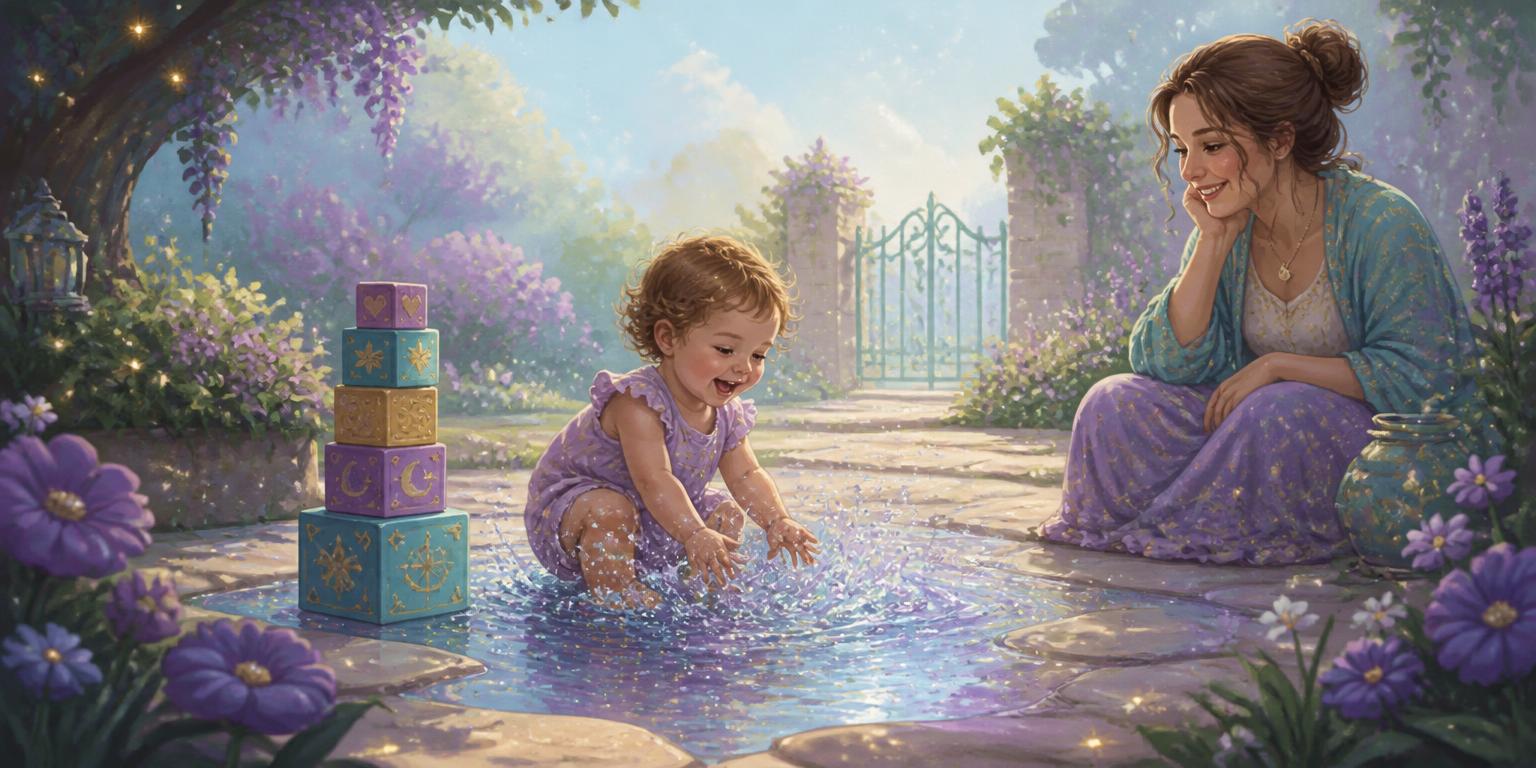
In this chapter, we explore how children aged two to three learn through their senses and their relationships. We move away from seeing them as 'mini-adults' who need to be taught, and instead view them as 'natural learners' who need to be supported. Whether they are splashing in a puddle, 'reading' a book upside down, or insisting on wearing their wellies to bed, every action is a building block for their future. Our role is to provide the time, space, and encouragement they need to flourish at their own pace.
The bigger picture
The defining feature of this stage is the drive for autonomy and the dawn of symbolic thought. The child is transitioning from a baby who is 'done to' to an active agent who wants to 'do it myself.' This shift is supported by a massive surge in language and the ability to represent the world through play and marks. Developmentally, the focus is on emotional co-regulation, communication, and the refinement of physical coordination to support this new-found independence.
Communication and Language
Prime areaListening, Attention and Understanding · Speaking
Between two and three, a child’s world expands through a 'language explosion.' They are moving from single words to two or three-word phrases, beginning to use talk not just to demand, but to share their inner thoughts and interests. This stage is marked by a shift from purely physical communication to the use of symbols—words—to represent people, objects, and feelings that are not immediately present.
Understanding typically precedes speaking; a child may follow a two-part instruction like 'find your shoes and put them by the door' before they can say the sentence themselves. This development is the bedrock of all future learning, as it allows the child to negotiate their needs, ask 'why?', and begin to engage in the very earliest forms of social storytelling. By fostering a language-rich environment now, we provide the tools for critical thinking and emotional regulation.
What you may notice
- Uses up to 300 words including nouns, verbs and adjectives.
- Follows two-part instructions such as 'Get your coat and wait by the gate.'
- Identifies familiar objects when they are described, e.g., 'Find the big blue ball.'
- Starts to use pronouns like 'I', 'me', and 'you' correctly.
- Asks many 'what' and 'where' questions to sustain a conversation.
- Starts to use simple sentences like 'Daddy go work' or 'Mummy eat apple.'
- Can listen to a short, familiar story with interest and point to pictures.
At home
- Recast what your child says; if they say 'Car go', you say 'Yes, the red car is going fast.'
- Narrate your day like a sports commentator to model sentence structures.
- Read the same books repeatedly; repetition builds neural pathways for vocabulary.
- Wait for ten seconds after asking a question to give them time to process and respond.
- Limit screen time, as passive listening does not build conversational turn-taking skills.
- Introduce new words during play, such as 'sticky', 'smooth', or 'heavy'.
- Sing action songs and nursery rhymes to help them hear the rhythm of language.
In the setting
- Create a 'quiet nook' away from the main bustle to encourage focused conversation.
- Use visual timetables and 'now and next' boards to support understanding of routines.
- Avoid over-correcting pronunciation; instead, model the correct sounds in your response.
- Observe and follow the child’s lead in play, commenting on what they are doing rather than asking testing questions.
Looking ahead to school and future learning
Strong oral language at age three is the single best predictor of later reading comprehension and academic success in primary school.
Physical Development
Prime areaGross Motor Skills · Fine Motor Skills
Physicality at this age is about mastery and coordination. Gross motor skills are becoming more fluid; the child is no longer just walking, but running, jumping, and climbing with increasing confidence. They are learning to navigate space and judge distances, which is essential for spatial awareness. This physical movement isn't just about exercise; it actually builds the vestibular and proprioceptive systems, which are foundational for being able to sit still and concentrate in later years.
Fine motor skills are also refining as the child moves from a palmar grasp to a more controlled 'pincer' or tripod-like grip. They are beginning to use tools with a purpose—spoons, chunky crayons, and safety scissors. These small-muscle movements in the hands and fingers are the direct precursors to writing. By providing opportunities to squeeze, pinch, and thread, we are strengthening the muscles required for the complex task of holding a pencil.
What you may notice
- Runs safely, avoiding obstacles, and can stop or change direction.
- Climbs stairs using alternating feet with some support.
- Kicks a ball with some force and can catch a large ball using their arms and chest.
- Can string large beads or put large pegs into a pegboard.
- Turns pages in a book, often one at a time.
- Starts to use a spoon and fork effectively, though it may still be messy.
- Enjoys mark-making with chunky crayons, making circular and vertical strokes.
At home
- Take daily walks where the child can climb on low walls or walk on uneven grass.
- Provide 'heavy work' like carrying a small watering can or pushing a toy pram.
- Play with playdough, encouraging squeezing, rolling, and poking.
- Let them help with 'real' tasks like tearing lettuce or stirring a bowl.
- Sing 'Head, Shoulders, Knees and Toes' to help them learn about body parts and coordination.
- Provide large cardboard boxes for them to crawl through and climb into.
- Encourage them to dress themselves, starting with easy items like hats or socks.
In the setting
- Provide 'open-ended' outdoor equipment like crates, planks, and tyres for physical problem-solving.
- Set up 'finger gym' activities such as using tweezers to pick up pom-poms.
- Ensure there is enough space for children to move freely and safely at high speeds.
- Incorporate movement into transition times, like 'hopping to the snack table.'
Looking ahead to school and future learning
Gross motor strength in the core and shoulders is the prerequisite for the fine motor control needed for legible handwriting in school.
Literacy
Specific areaComprehension · Word Reading · Writing
For a two-year-old, literacy is all about the joy of stories and the discovery that print carries meaning. They are not yet 'reading' in the formal sense, but they are beginning to recognise familiar logos (like a supermarket sign) and understand that the squiggles on a page represent words. They love rhythm, rhyme, and repetition, which helps them predict what comes next—a key reading skill.
In terms of writing, this stage is about 'mark-making.' To a toddler, a scribble isn't just a mess; it is a representation of an idea. They might tell you that a jagged line is a 'scary dog' or their name. Valuing these early marks as meaningful communication is crucial for building their identity as a writer. This is a time to saturate their environment with books and diverse mark-making materials, fostering a lifelong love of literature.
What you may notice
- Has favourite books and asks to read them over and over.
- Repeats words or phrases from familiar stories.
- Handles books carefully, holding them the right way up and turning pages.
- Notices print in the environment, like signs or labels on toy boxes.
- Distinguishes between the marks they make and the drawing they do.
- Enjoys rhythmic stories and can fill in the missing word in a rhyme.
- Starts to attribute meaning to their scribbles when asked what they have 'written'.
At home
- Create a cosy book area with a small selection of high-quality picture books.
- Point to the words as you read to show that text flows from left to right.
- Make 'prop boxes' for favourite stories, like a bowl and a teddy for Goldilocks.
- Provide various surfaces for mark-making: chalk on the pavement, sticks in mud, or crayons on big paper.
- Read signs and labels aloud when you are out shopping or at the park.
- Talk about the pictures in books, asking 'What do you think will happen next?'
- Keep a 'special' notebook for the child to 'write' their own stories or shopping lists.
In the setting
- Display children’s 'writing' at their eye level to show it is valued.
- Use 'Story Baskets' with physical objects to help EAL children engage with the narrative.
- Model writing in front of children, such as writing their name on their artwork.
- Provide a print-rich environment including labels, menus in the role-play area, and posters.
Looking ahead to school and future learning
Developing a 'print awareness' and a love for stories now creates the motivation and foundational skills needed for phonics instruction in Reception.
Mathematics
Specific areaNumber · Numerical Patterns
Mathematics for two-to-three-year-olds is far more than just counting to ten. It is about developing 'number sense'—an intuitive feel for how numbers work. They are starting to understand the concept of 'one-to-one correspondence,' which means touching one object for every number they say, though they will often skip numbers or objects at first. They are also beginning to 'subitise,' which is the ability to look at a small group of objects (up to two or three) and know how many there are without counting.
Beyond numbers, toddlers are budding mathematicians in how they categorise the world. They are learning about patterns, shapes, and measures through play. When they fill and empty containers in the sandpit, they are learning about volume and capacity. When they line up cars by colour, they are learning about sets and classification. These early experiences with logical thinking are the building blocks of mathematical reasoning.
What you may notice
- Recites some number names in sequence, though may miss some (e.g., '1, 2, 4, 5').
- Starts to use 'number words' in play, even if not counting accurately.
- Can pick out 'one' or 'two' objects from a group when asked.
- Shows an interest in 'more' and 'less' (especially with snacks!).
- Begins to categorise objects by a single feature, like 'all the blue ones.'
- Uses spatial language like 'in', 'on', 'under', and 'up'.
- Notices simple patterns, such as a stripey shirt or a row of blocks.
At home
- Count everyday objects together: 'One button, two buttons, three buttons.'
- Use mathematical language during routines, like 'Do you want the big piece or the small piece?'
- Play with stacking cups or nesting dolls to explore size and order.
- Sing number songs like 'Five Little Ducks' or '1, 2, 3, 4, 5, Once I Caught a Fish Alive.'
- Point out numbers in the environment, such as on front doors or bus stops.
- Play 'hide and seek' with toys to practice using positional language (behind, under).
- Bake together to explore measuring, weighing, and 'full/empty' concepts.
In the setting
- Provide plenty of loose parts (shells, stones, buttons) for sorting and counting.
- Integrate math into daily life, like counting how many children are here for snack.
- Use 'mathematical talk' to describe what children are doing, e.g., 'You’ve built a very tall tower.'
- Create 'number rich' areas with tape measures, scales, and large wooden numbers.
Looking ahead to school and future learning
A strong grasp of early number concepts and spatial reasoning is the essential platform for the more abstract arithmetic and geometry taught in primary school.
Understanding the World
Specific areaPast and Present · People, Culture and Communities · The Natural World
At this age, a child is a little scientist, constantly testing hypotheses about how the world works. Their curiosity is boundless, and they are starting to make connections between cause and effect (e.g., 'If I push this button, the light comes on'). They are becoming aware of the passage of time through their daily routines and are starting to remember significant past events, like a birthday or a trip to the farm.
They are also becoming aware of their own community. They notice differences between people—skin colour, hair texture, or the fact that some people wear glasses—and they are curious about these variations. It is a vital time to introduce a positive celebration of diversity. Furthermore, their connection to the natural world is growing; they love exploring textures like mud, water, and leaves, and are beginning to understand that living things need care.
What you may notice
- Remembers and talks about significant recent events (e.g., 'Went to Nanna’s').
- Shows an interest in the jobs people do, like the postman or the bin lorries.
- Notices and asks questions about the natural world, like 'Where did the snail go?'
- Can operate simple mechanical toys or digital devices with adult support.
- Comments on similarities and differences between themselves and others.
- Enjoys playing with 'small world' toys like farms, garages, or dolls' houses.
- Shows care for plants and animals, perhaps by watering a flower gently.
At home
- Go on 'nature walks' and collect 'treasures' like acorns, leaves, or stones.
- Talk about family members and look at photos of 'when you were a baby.'
- Involve them in gardening, even if it’s just watering a pot on a windowsill.
- Talk about different celebrations and traditions, both your own and others'.
- Explore different textures together: ice, shaving foam, dry pasta, and water.
- Visit local community places like the library, the market, or the park.
- Answer their 'why' questions simply and honestly, encouraging further curiosity.
In the setting
- Provide a diverse range of dolls, books, and resources that reflect the wider world.
- Create 'discovery baskets' with natural materials for sensory exploration.
- Invite parents to share aspects of their culture or home life with the setting.
- Use 'then and now' photos of the children to help them understand growth and change.
Looking ahead to school and future learning
Early curiosity about people and the environment builds the foundational knowledge for future subjects like History, Geography, and Science.
Expressive Arts and Design
Specific areaCreating with Materials · Being Imaginative and Expressive
For two-to-three-year-olds, art is a sensory experience rather than a search for a finished product. They are fascinated by the process—how the paint feels between their fingers, the sound a drum makes when hit hard versus soft, or how two colours merge to create a new one. This 'process art' is essential for developing creativity and self-expression. They are beginning to realise they can use tools and materials to communicate their ideas and feelings.
This is also the dawn of 'pretend play.' The child begins to use one object to represent another—a block becomes a phone, or a cardboard box becomes a boat. This symbolic thinking is a massive cognitive leap. They are starting to act out familiar scenarios, like 'cooking dinner' or 'putting the baby to sleep,' which helps them process their experiences and understand the social world. Fostering this imagination is key to developing problem-solving and flexible thinking.
What you may notice
- Explores different sounds instruments make and joins in with singing.
- Experiments with colours and how they change when mixed.
- Uses simple tools like sponges, brushes, or rollers to create effects.
- Engages in 'pretend' play, like pretending to drink from an empty cup.
- Moves their body rhythmically to music and enjoys 'dancing'.
- Uses blocks or other materials to build 'enclosures' or simple structures.
- Starts to tell stories through their play, even if the plot is fragmented.
At home
- Provide a 'dressing up' box with simple items like hats, scarves, and old bags.
- Play different types of music—classical, jazz, pop—and dance together.
- Give them 'open-ended' materials like empty boxes, tubes, and fabric scraps.
- Set up a 'kitchen' with real pots, pans, and wooden spoons.
- Allow for 'messy play' with paints or water, focusing on the fun, not the mess.
- Sing songs with actions and encourage the child to make up their own moves.
- Comment on their creative process: 'I see you are using lots of blue circles today!'
In the setting
- Provide 'open-ended' role-play areas that can become anything from a shop to a space rocket.
- Ensure children have easy access to a variety of art materials so they can choose for themselves.
- Use 'sustained shared thinking'—joining in their play without taking it over.
- Record and play back sounds or songs the children have made to build their confidence.
Looking ahead to school and future learning
The ability to think symbolically and express ideas through different media is the core of creative problem-solving and the arts in later schooling.
If you have a question or a concern
Children develop at their own pace, and a wide range of development is typical at every age. Talking things through early is never an overreaction. Speak to your health visitor, GP or your child’s key person if you notice any of the following.
- If a child is not yet using any single words by 24 months.
- If they do not seem to understand simple instructions or respond to their name.
- If they consistently avoid eye contact or do not show interest in other children.
- If they have lost skills they previously had (such as words or physical abilities).
- If they are extremely distressed by sensory experiences like certain sounds or textures.
A closing thought
As you navigate this year, remember that a 'tantrum' is often just a young child’s way of saying 'I have big feelings and I don't have the words yet.' By staying calm, offering choices, and celebrating their small steps towards independence, you are building a foundation of trust and confidence that will last a lifetime. Enjoy the magic of their growing imagination and the unique way they see the world.